


“No Added Sugar” Doesn’t Mean Sugar-Free - What Food Regulation Really Says

Updated: Feb 6
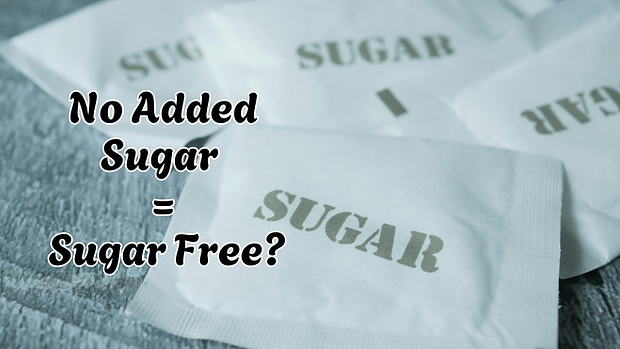
“No Added Sugar” Doesn’t Mean Sugar-Free - What Food Regulation Really Says
Walk down any supermarket aisle in Malaysia and one phrase jumps out from the shelves: “No Added Sugar.”
To many consumers, this label feels like an instant green light - a healthier option, a smarter choice, even a safer product for those watching their sugar intake. But here’s the truth: “No Added Sugar” does not mean sugar-free. Under Malaysian food regulations, that distinction is not just important, it’s critical.
This means a product can legally claim “No Added Sugar” and still contain a high amount of sugar, as long as that sugar is naturally occurring.
What Consumers Assume vs What the Regulation Actually Means
From a consumer’s perspective, “No Added Sugar” often implies:
Zero sugar content
Safe for diabetics
Healthier than regular products
However, Malaysian Food Regulations define this claim far more narrowly. The regulation focuses on whether sugar is added during processing, not whether the final product contains sugar.
How to Define ‘No Added Sugar’ in Malaysia?
In Malaysia, “No Added Sugar” is regulated under the Food Regulations 1985. A non-addition of sugar claim is only permitted when all regulatory conditions are met.
No sugar of any type has been added to the food, including sucrose, glucose, fructose, honey, syrups, or similar sugars.
No ingredients that contain sugar as an ingredient, such as sweetened fruit concentrates or sweetened purées.
No ingredient containing sugar as a substitute for added sugar.
The sugar content is not increased through processing.
If any of these conditions are not met, the claim becomes misleading and non-compliant.
Mandatory Sugar Declaration Still Applies
Using a “No Added Sugar” claim does not remove the obligation to be transparent.
When the claim appears on a product:
Total sugar must still be declared in the Nutrition Information Panel
Sugar values must be shown per 100 g / 100 ml and per serving
This requirement ensures consumers can clearly see how much sugar the product contains, regardless of front-of-pack marketing claims.
Naturally Occurring Sugar Is Still Sugar
This is where confusion often arises. Even when no sugar is added, many foods naturally contain sugar, such as:
Fructose in fruits and fruit juices
Lactose in milk and dairy products
Maltose in grains
Examples of products that may legally claim “No Added Sugar”:
100% fruit juice (no added sweeteners)
Plain yogurt with natural lactose
Fruit-based products without sweetened concentrates
Despite the claim, these products are not sugar-free and may still contribute significantly to daily sugar intake.
“No Added Sugar” vs “Sugar-Free”: Not the Same Thing
These two claims are not interchangeable under Food Regulation.
Claim | What It Means |
No Added Sugar | No sugar added during processing, but natural sugars may be present |
Sugar-Free | Sugar content must be extremely low or negligible (<0.5g/100g), based on strict criteria |
Conclusion
While “No Added Sugar” may sound like a health guarantee, the truth is more nuanced. Food Regulation allows this claim only under strict conditions and naturally occurring sugars in foods still count toward total sugar intake.
If you need help reviewing your formulation or food label, our team can provide full regulatory checks to ensure your product is compliant before launch. With the right guidance, you can confidently use “No Added Sugar” claims while staying fully aligned with Malaysian food regulations.

Aqurate Ingredients is an international player in supplying functional ingredients and providing innovative solutions to the food & beverage, nutraceutical, pharmaceutical and cosmeceutical industry. We believe, a satisfied customer is a repeat customer.


Comments